Does your knee hurt when you go down the stairs in your building, even though walking on level ground feels fine? The direction that hurts, the spot where you feel it and any swelling are details worth noting. If knee pain on stairs keeps returning, a home physiotherapy assessment in Gurgaon can help you understand which movements bring it on and what to change first.
Why your knee may hurt on stairs
Both climbing and descending stairs ask the knee to support your weight while bent. Pain around or behind the kneecap that also shows up during squats or after sitting for a long time can fit a pattern called patellofemoral pain. In adults aged 45 and older, a clinician may also consider knee osteoarthritis if pain comes on with activity and there is little or no morning stiffness.
Tell the clinician if symptoms began after a twist, fall or direct blow. Make a note of whether the pain is in front, on the inside or outside, or behind the knee. Bring up any swelling, locking or feeling that the knee may give way. These clues help guide the assessment.
NHS inform guidance on patellofemoral pain and NICE guidance on knee osteoarthritis assessment and care
What to try during everyday activities
If your pain came on gradually, is mild and you feel steady on your feet, try adjusting the activities that repeatedly aggravate it.
- Use the handrail and allow more time. If you feel unsteady on the stairs, use the lift where available.
- Cut back temporarily on repeated flights. On a day when you need to make several trips, use the lift for some of them and keep up other movement you tolerate, such as short walks on level ground.
- Track what happens later. Note whether climbing or descending is harder and how your knee feels that evening or the next morning. Share the pattern at your first visit.
Leicestershire Partnership NHS Trust guidance on modifying activity with kneecap pain
When to seek medical care
Get urgent medical advice if your knee is very painful, you cannot move it or put weight on it, it becomes badly swollen or changes shape, or it locks or gives way. Seek urgent care if the knee is hot or red and you have a fever or feel shivery.
For recurring pain that limits everyday activities or pain that has lasted a few weeks without improvement, arrange an assessment.
What a home physiotherapist may assess
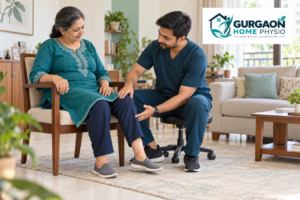
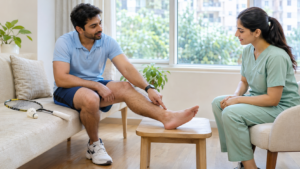
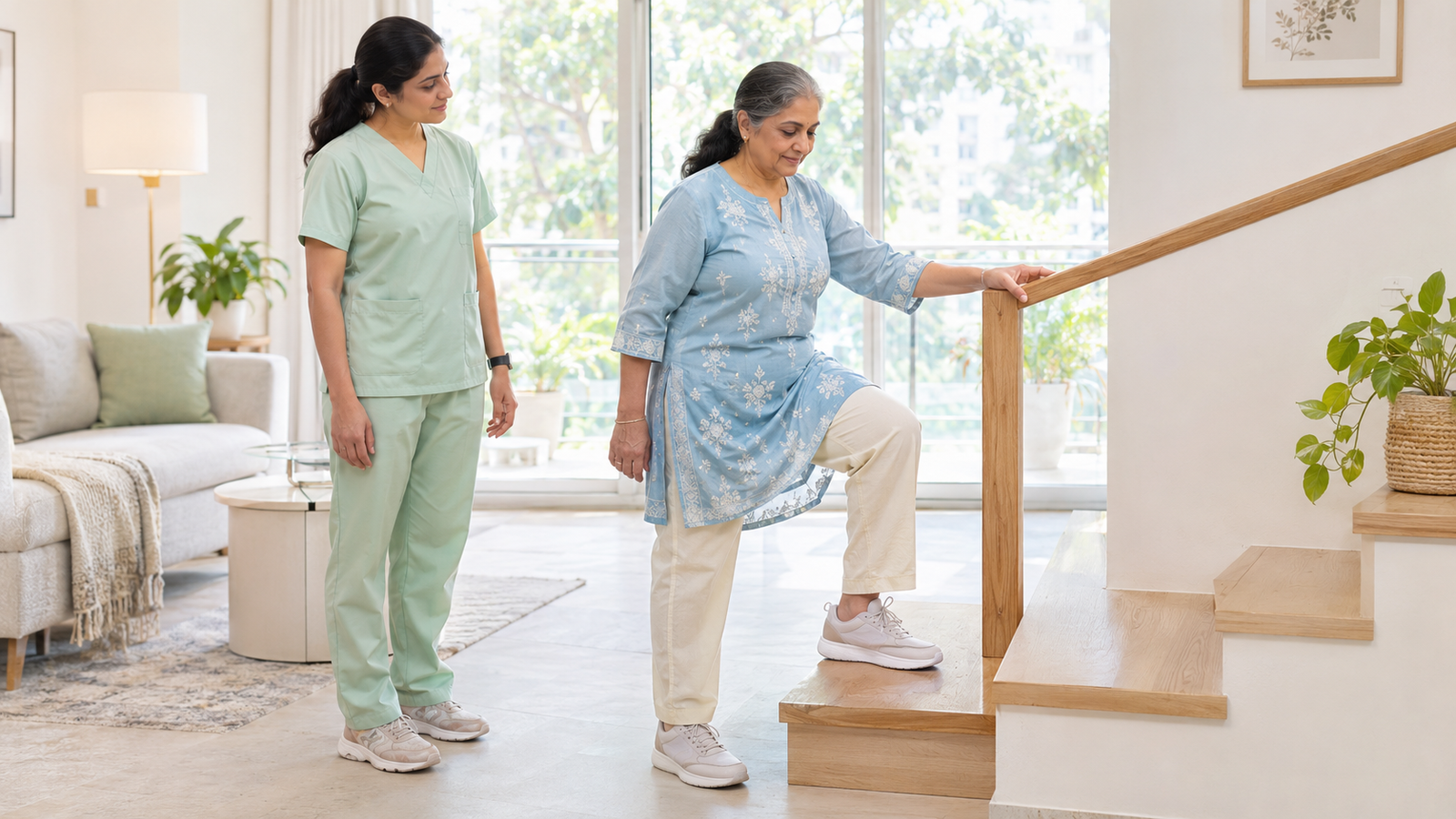
The first visit usually starts with a discussion about when the pain began, which activities bring it on and what you want to get back to. When appropriate, the physiotherapist may check knee movement, leg strength, balance and tasks such as standing up from a chair. They may observe a step-up or step-down if it is safe to do so.
For patellofemoral pain, research supports education and exercises targeting the knee, with hip exercises added as appropriate. The physiotherapist can select a starting level and adjust it based on how your knee responds. Pick a practical goal for follow-up, such as going down one flight in your building more comfortably.
British Journal of Sports Medicine best-practice guide for patellofemoral pain
Frequently asked questions
Can my knee hurt on stairs even if flat walking feels fine?
Yes. A step puts different demands on the knee from walking on level ground. Tell your physiotherapist which direction is harder and whether you notice pain around the kneecap or elsewhere.
Do I need to practise stairs during the first visit?
Your physiotherapist can start with simpler movements if a step is too painful or feels unsafe. Tell them in advance if you struggle with balance or the knee has given way.
What should I have ready for a home visit?
Have a stable chair, your usual footwear and any relevant reports ready. You can also share the stairs or daily tasks you want to manage more comfortably.
Can I request a physiotherapy home visit in my Gurgaon sector?
Share your sector or society name by phone or WhatsApp. Gurgaon Home Physio can confirm coverage, fees and available appointments.
Book a knee physiotherapy home visit in Gurgaon
Message Gurgaon Home Physio with your locality, how long your knee has been hurting and whether going up or down stairs is harder.
Gurgaon Home PhysioBuilding number 1084, Basement, C-Block, near Subhash Chowk, Rail Vihar, Sector 47, Gurugram, Haryana 122018
Website · Google Maps · Facebook · Instagram
This article is for general information. A healthcare professional can assess your individual symptoms.